

What are the types of E-cigarettes?

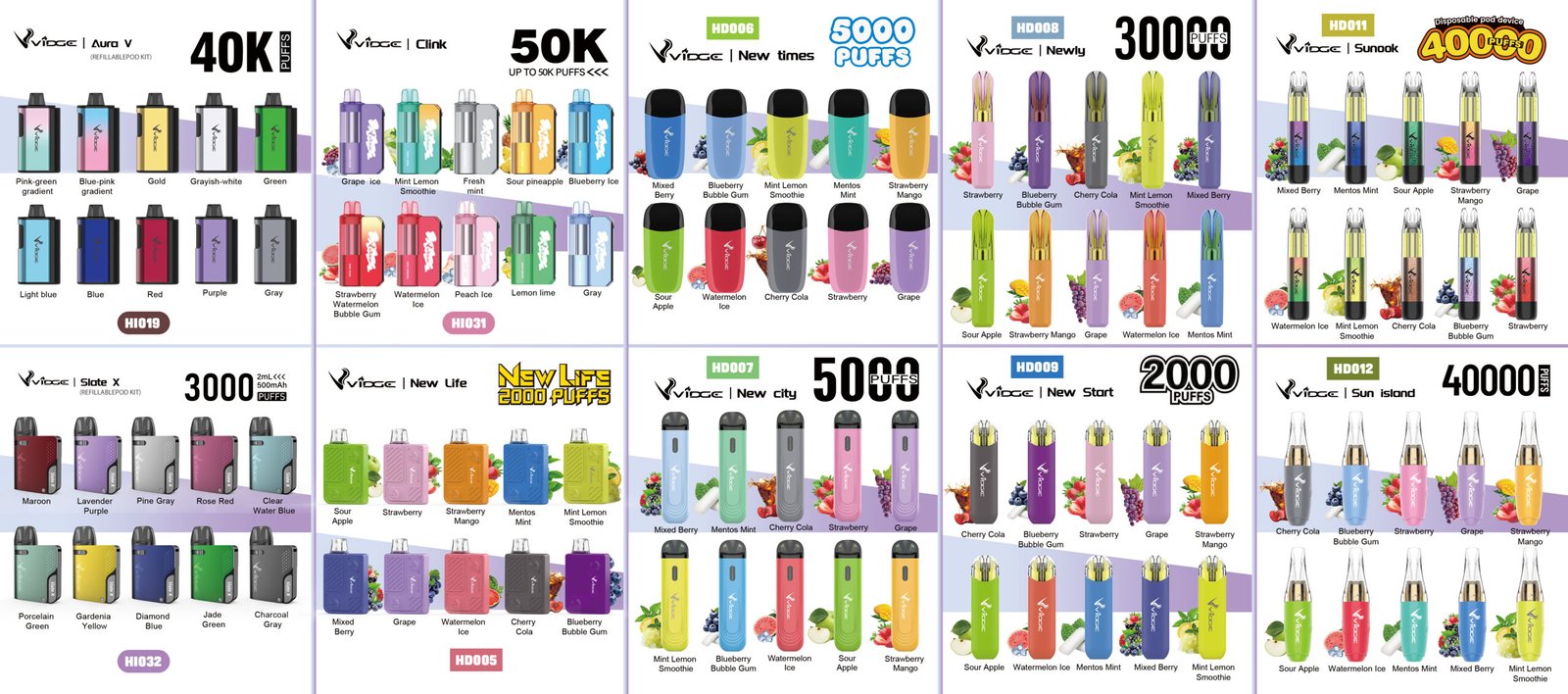
E-cigarettes, as alternatives to traditional cigarettes, have gained rapid global popularity since their introduction. However, many people’s understanding of e-cigarettes remains at a superficial level, viewing them merely as “electronic devices that produce smoke.” In reality, e-cigarettes have evolved into various types, each with distinct features and working principles. This article will systematically outline the main categories of e-cigarettes to help you gain a more comprehensive understanding of this product field.
1. Classification by Working Principle: Different Paths in Vaporization Technology
1. Atomizer E-cigarettes (Vaporizers)
This is the most common type of e-cigarette. It uses battery power to heat a nicotine solution in e-liquid, vaporizing it into an inhalable aerosol. Atomizer e-cigarettes typically consist of three parts: a battery, an atomizer core, and an e-liquid reservoir. Depending on the atomizer core, they can be further divided into replaceable and disposable types.
2. Heat-Not-Burn E-cigarettes
These products do not directly vaporize liquid. Instead, they use precise temperature control technology to heat specially designed tobacco sheets or capsules at temperatures insufficient for combustion (usually below 350°C), releasing nicotine and tobacco flavors. Unlike atomizer e-cigarettes, heat-not-burn products use real tobacco instead of e-liquid.
3. Ultrasonic Vaporization E-cigarettes
This less common type employs ultrasonic technology to vaporize e-liquid, eliminating the need for heating coils. Theoretically, it can provide a purer taste, but it currently holds a low market share.
2. Classification by Usage Method: From Disposable to Rebuildable
1. Disposable E-cigarettes
Pre-filled with e-liquid and pre-charged, these are designed for single use and require no charging or refilling. They are simple to use, suitable for beginners, but have higher long-term costs and are less environmentally friendly.
2. Pod Systems
Featuring a design where the pod (containing e-liquid) is separate from the battery, only the pod needs replacement when the e-liquid is depleted. Most products are compact and portable, making them one of the mainstream types on the market today. Based on whether the pod is refillable, they can be further divided into closed and open systems.
3. Refillable Tank E-cigarettes
Users can purchase e-liquid separately and refill the reservoir themselves, offering lower usage costs and greater freedom in flavor selection. These devices typically have higher power and can produce more vapor.
4. Mechanical Mods and Rebuildable Atomizers (RDAs/RDTAs)
High-end types aimed at vaping enthusiasts, allowing users to build their own heating coils and adjust wicking for a fully customized vaping experience. These devices require specialized knowledge, and improper operation may pose safety risks.
3. Classification by Design: From Mimicry to Personalization
1. Cigalikes
Designed to closely resemble traditional cigarettes in appearance. Early e-cigarettes often adopted this design to help smokers transition seamlessly. They usually have lower power and produce less vapor.
2. Vape Pens
Shaped similarly to pens or highlighters, slightly larger than cigalikes, with improved battery life and e-liquid capacity.
3. Box Mods
Featuring a square or rectangular design, they can accommodate larger batteries, providing longer usage time and higher output power. They often support advanced functions like temperature control and power adjustment.
4. Creative Design E-cigarettes
As the market has developed, various designs breaking traditional forms have emerged, such as fashion accessory styles and mini portable types, catering to the aesthetic preferences of different users.
4. Classification by Output Power: From Mouth-to-Lung to Direct-Lung
1. Low-Power E-cigarettes (Typically Below 20 Watts)
Simulate the “mouth-to-lung” experience of traditional smoking, where vapor is drawn into the mouth first and then into the lungs. Most pod systems and cigalikes fall into this category.
2. Medium-to-High-Power E-cigarettes (20-80 Watts)
Support the “direct-lung” inhalation method, allowing users to draw vapor directly into the lungs, producing larger vapor clouds. Most refillable tank devices belong to this category.
3. High-Power E-cigarettes (Above 80 Watts)
Designed for users seeking massive vapor production and an extreme sensory experience. They typically require e-liquid with low nicotine concentrations.
5. Classification by Special Features: Advanced Technological Choices
1. Adjustable Power/Voltage E-cigarettes
Allow users to adjust the output power, changing the vaporization temperature and vapor volume for a different sensory experience.
2. Temperature Control E-cigarettes
Use chips to control heating temperature, preventing excessive heat that could produce harmful substances and providing a more consistent flavor.
3. Smart E-cigarettes
Equipped with Bluetooth connectivity and smartphone apps, they can record usage data, control consumption, locate the device, etc., offering a stronger sense of technological sophistication.